Critical Minerals: Why Hedge Funds May Be Underestimating the Next Move
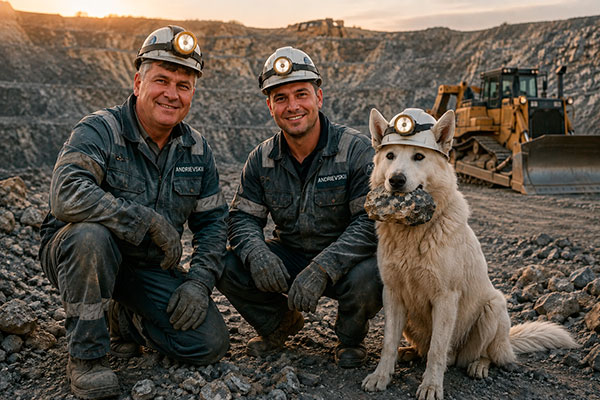
After an extraordinary rally in U.S. critical minerals stocks over the past year, hedge funds have increasingly turned bearish. Short positions have risen sharply across several companies that benefited from Washington's industrial policy, reflecting a growing belief that government support alone will not be enough to break China's dominance of global critical mineral supply chains.
Source:ft.com
"...Hedge funds have been increasing their bets against US critical minerals companies, in the belief that backing from the Trump administration that has turbocharged the sector will be insufficient to break China’s stranglehold on global supply. Short positions — bets that a stock will fall in value — have risen this year against groups including US Antimony Corporation, American Resources Corporation and MP Materials, according to stock lending data from S&P Global Market Intelligence..."
The skepticism is understandable. Many U.S. critical minerals companies surged after the White House committed billions of dollars through strategic investments, loans and procurement programs. As valuations climbed rapidly, hedge funds increasingly viewed the sector as vulnerable to a correction.
Yet markets rarely move in straight lines.
The past two trading sessions suggest investors may already be reassessing the bearish narrative. While two days do not establish a trend, broad buying across the sector indicates that selling pressure may be fading just as short interest has reached elevated levels.
Ironically, this may be creating the conditions for a classic short squeeze.
If the White House continues expanding support through additional defence contracts, strategic investments, tax incentives or loan guarantees, short sellers could rapidly become forced buyers. With short interest already elevated, positive policy announcements may amplify rather than simply support the next move higher.
Although speculative positioning has been concentrated in previously high-flying U.S. companies, the correction has spread across much of the global critical minerals sector, including many small and mid-cap developers whose long-term investment case remains intact.
Governments across North America and Europe continue treating critical minerals as a matter of national security. At the same time, demand from defence, artificial intelligence, electrification and advanced manufacturing continues to expand, while developing new mines and processing facilities outside China remains a slow and capital-intensive process.
This imbalance between growing demand and constrained future supply continues to support the long-term outlook for the sector.
Short sellers are betting that valuations ran too far.
Long-term investors are betting that strategic supply security has only begun to be reflected in market prices.
If Washington continues strengthening its industrial policy, today's elevated short interest could become tomorrow's buying pressure.
Andrievskii Verdict
The current wave of short selling is concentrated primarily in U.S. companies that experienced the strongest policy-driven revaluation over the past year. That reflects skepticism about the speed of rebuilding Western supply chains—not necessarily a deterioration in the long-term investment case.
Critical minerals are no longer just another commodity sector. They have become part of national security, industrial policy and geopolitical competition.
If the White House continues expanding financial and industrial support, today's elevated short interest could become a powerful catalyst rather than a headwind. Markets often underestimate how quickly sentiment can reverse once government policy begins translating into commercial contracts.
The recent correction has also created compelling opportunities outside the United States.
Companies such as Pensana, Tungsten West, Namibia Critical Metals, and American Tungsten and Antimony Ltd. were caught in the broader sector sell-off despite owning strategic assets that are becoming increasingly difficult to replicate. Their projects require years to develop, but that scarcity is precisely what could make them increasingly valuable as Western economies diversify away from Chinese supply chains.
Our view remains constructive.
The recent correction appears less like the beginning of a prolonged bear market and more like a healthy repricing after an exceptional rally. If government support continues to expand and commercial contracts begin following policy commitments, today's crowded short positions could become the fuel for tomorrow's rally.
History suggests that the best opportunities in strategic industries rarely emerge when optimism is at its highest. They emerge when long-term fundamentals remain intact while short-term sentiment reaches its most pessimistic extreme.
Aleksei Andrievskii | Advisory Board Member, Bendura Bank AG | Liechtenstein