Apollo to Buy EasyJet for £5.7 Billion to End Bidding War
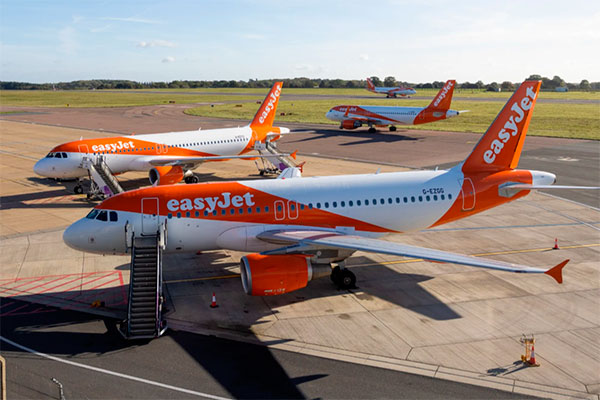
Apollo Global Management agreed to buy EasyJet Plc for £5.7 billion ($7.7 billion), clinching a deal that’s likely to shake up the dynamics in Europe’s highly competitive market for budget airlines.
The private equity firm will pay 715 pence per share in cash, according to a statement Thursday. Earlier, rival bidder Castlelake LP said it was pulling out of the chase and not raising its most recent offer of £5.5 billion.
“Apollo has followed easyJet for many years and believes that the easyJet Group is one of the most attractive businesses in the global aviation sector,” according to a joint statement. The buyer is “highly supportive of the easyJet management team’s existing strategy.”
EasyJet shares closed Thursday about 7% under Apollo’s offer price. They’ve consistently traded below the escalating bids, suggesting investors may be doubting that any deal could overcome regulatory hurdles.
The transaction follows months of wooing the carrier. The deadline for submitting final offers was Aug. 7.
Apollo will be gaining control of an airline that helped pioneer ultra low-cost travel in Europe and owns many attractive assets, including a fleet of modern Airbus SE A320-type jets; landing slots at constrained airports in London, Milan and Geneva; and a thriving vacation packages business.
The company’s biggest shareholder is the family of founder Stelios Haji-Ioannou with 15.3%.
“I am pleased with Apollo’s strategic intentions for the easyJet business, which aim to create more growth,” he said in a statement. “My family and I intend to remain invested as long-term major shareholders of easyJet for the next chapter in the company’s journey.”
As a US entity, Apollo can’t gain full control of orange-livery EasyJet because the airline operates under UK and European rules that require majority ownership and control by regional nationals.
Shareholders choosing to roll over their stock into the newly formed entity alongside the Haji-Ioannou family will hold as much as 49.9% of the airline after it’s acquired. An EU management incentive plan will own as much as 5%, meaning the ownership structure will comply with regulations.
In the joint statement, the airline said the investment firm is committed to honoring staff contracts, respecting the group’s future operations and maintaining the company’s headquarters in London.
Apollo previously sought to dispel concern the airline would be broken up, given that the individual parts of EasyJet are much more valuable than the current business.
Apollo already runs an aircraft and aviation financing business, and it has invested in Sun Country Airlines Holdings Inc., Aeromexico and Atlas Air Worldwide Holdings Inc., one of the world’s biggest air cargo operators. Sun Country and Aeromexico both became profitable.
Barclays Plc, PJT Partners Inc. and Citigroup Inc. are advising Apollo. EasyJet’s banks are Evercore Inc., BNP Paribas SA and Panmure Liberum. Peel Hunt is advising Haji-Ioannou.
EasyJet had been sparring over a potential deal with Castlelake since late May, with the UK airline calling the numerous overtures “highly opportunistic” and saying Castlelake was trying to buy it “on the cheap.” The initial bid was 560 pence.
EasyJet eventually came around, opening its books to Castlelake and then agreeing in principle to a fifth offer of 690 pence on July 5.
Days later, New York-based Apollo swooped in with a surprise offer of 715 pence. EasyJet immediately agreed to that one in principle and said it was “no longer minded to recommend the Castlelake proposal.”
In abandoning pursuit, Castlelake said Thursday it was “very appreciative of the constructive engagement with the easyJet Board and management team, and would like to thank them for their time and consideration of this potential transaction.”
Completion of a deal would take private an airline that went public in November 2000 at 310 pence, according to data compiled by Bloomberg. Shares reached an all-time high of 1,584 pence in early 2007 amid an aggressive expansion across Europe.
Lately, though, the budget carrier has been under pressure from surging jet fuel prices because of the Iran war. It reported £85 million in profit before tax in the first quarter, a 70% drop from the year prior.
However, Chief Executive Officer Kenton Jarvis said July 23 that customers are gaining confidence to book longer in advance.
Source: www.bloomberg.com
Aleksei Andrievskii | Advisory Board Member, Bendura Bank AG | Liechtenstein